出现在书名中的结果
共 74 条

Generative Deep Learning with Python
1人今日阅读
Dive into the world of Generative Deep Learning with Python, mastering GANs, VAEs, & autoregressive models through projects & advanced topics. Gain practical skills & theoretical knowledge to create groundbreaking AI applications. Key Features Comprehensive coverage of deep learning and generative models. In-depth exploration of GANs, VAEs, & autoregressive models & advanced topics in generative AI. Practical coding exercises & interactive assignments
1
Applied Deep Learning with Python
Taking an approach that uses the latest developments in the Python ecosystem, you’ll first be guided through the Jupyter ecosystem, key visualization libraries and powerful data sanitization techniques before we train our first predictive model. We’ll explore a variety of approaches to classification like support vector networks, random decision forests and k-nearest neighbours to build out your understanding before we move into more complex territory. It’s okay if these terms seem overwhelming; we’ll show you how to put them to work.We’ll build upon our classification coverage by taking a quick look at ethical web scraping and interactive visualizations to help you professionally gather and present your analysis. It’s after this that we start building out our keystone deep learning application, one that aims to predict the future price of Bitcoin based on historical public data.By guiding you through a trained neural network, we’ll explore common deep learning network architectures (convolutional, recurrent, generative adversarial) and branch out into deep reinforcement learning before we dive into model optimization and evaluation. We’ll do all of this whilst working on a production-ready web application that combines Tensorflow and Keras to produce a meaningful user-friendly result, leaving you with all the skills you need to tackle and develop your own real-world deep learning projects confidently and effectively.
Hands-On Deep Learning Algorithms with Python
Deep learning is one of the most popular domains in the AI space, allowing you to develop multi-layered models of varying complexities. This book introduces you to popular deep learning algorithms—from basic to advanced—and shows you how to implement them from scratch using TensorFlow. Throughout the book, you will gain insights into each algorithm, the mathematical principles behind it, and how to implement it in the best possible manner. The book starts by explaining how you can build your own neural networks, followed by introducing you to TensorFlow, the powerful Python-based library for machine learning and deep learning. Moving on, you will get up to speed with gradient descent variants, such as NAG, AMSGrad, AdaDelta, Adam, and Nadam. The book will then provide you with insights into RNNs and LSTM and how to generate song lyrics with RNN. Next, you will master the math for convolutional and capsule networks, widely used for image recognition tasks. Then you learn how machines understand the semantics of words and documents using CBOW, skip-gram, and PV-DM. Afterward, you will explore various GANs, including InfoGAN and LSGAN, and autoencoders, such as contractive autoencoders and VAE. By the end of this book, you will be equipped with all the skills you need to implement deep learning in your own projects.

Hands-On Deep Learning Architectures with Python
Deep learning architectures are composed of multilevel nonlinear operations that represent high-level abstractions; this allows you to learn useful feature representations from the data. This book will help you learn and implement deep learning architectures to resolve various deep learning research problems.Hands-On Deep Learning Architectures with Python explains the essential learning algorithms used for deep and shallow architectures. Packed with practical implementations and ideas to help you build efficient artificial intelligence systems (AI), this book will help you learn how neural networks play a major role in building deep architectures. You will understand various deep learning architectures (such as AlexNet, VGG Net, GoogleNet) with easy-to-follow code and diagrams. In addition to this, the book will also guide you in building and training various deep architectures such as the Boltzmann mechanism, autoencoders, convolutional neural networks (CNNs), recurrent neural networks (RNNs), natural language processing (NLP), GAN, and more—all with practical implementations.By the end of this book, you will be able to construct deep models using popular frameworks and datasets with the required design patterns for each architecture. You will be ready to explore the potential of deep architectures in today's world.

Deep Learning with Applications Using Python
暂无简介
Mastering OpenCV 4 with Python
OpenCV is considered to be one of the best open source computer vision and machine learning software libraries. It helps developers build complete projects in relation to image processing, motion detection, or image segmentation, among many others. OpenCV for Python enables you to run computer vision algorithms smoothly in real time, combining the best of the OpenCV C++ API and the Python language.In this book, you'll get started by setting up OpenCV and delving into the key concepts of computer vision. You'll then proceed to study more advanced concepts and discover the full potential of OpenCV. The book will also introduce you to the creation of advanced applications using Python and OpenCV, enabling you to develop applications that include facial recognition, target tracking, or augmented reality. Next, you'll learn machine learning techniques and concepts, understand how to apply them in real-world examples, and also explore their benefits, including real-time data production and faster data processing. You'll also discover how to translate the functionality provided by OpenCV into optimized application code projects using Python bindings. Toward the concluding chapters, you'll explore the application of artificial intelligence and deep learning techniques using the popular Python libraries TensorFlow, and Keras.By the end of this book, you'll be able to develop advanced computer vision applications to meet your customers' demands.

GAN实战
本书主要介绍构建和训练生成对抗网络(GAN)的方法。全书共12 章,先介绍生成模型以及GAN 的工作原理,并概述它们的潜在用途,然后探索GAN 的基础结构(生成器和鉴别器),引导读者搭建一个简单的对抗系统。本书给出了大量的示例,教读者学习针对不同的场景训练不同的GAN,进而完成生成高分辨率图像、实现图像到图像的转换、生成对抗样本以及目标数据等任务,让所构建的系统变得智能、有效和快速。
Hands-On Python Deep Learning for the Web
When used effectively, deep learning techniques can help you develop intelligent web apps. In this book, you'll cover the latest tools and technological practices that are being used to implement deep learning in web development using Python.Starting with the fundamentals of machine learning, you'll focus on DL and the basics of neural networks, including common variants such as convolutional neural networks (CNNs). You'll learn how to integrate them into websites with the frontends of different standard web tech stacks. The book then helps you gain practical experience of developing a deep learning-enabled web app using Python libraries such as Django and Flask by creating RESTful APIs for custom models. Later, you'll explore how to set up a cloud environment for deep learning-based web deployments on Google Cloud and Amazon Web Services (AWS). Next, you'll learn how to use Microsoft's intelligent Emotion API, which can detect a person's emotions through a picture of their face. You'll also get to grips with deploying real-world websites, in addition to learning how to secure websites using reCAPTCHA and Cloudflare. Finally, you'll use NLP to integrate a voice UX through Dialogflow on your web pages.By the end of this book, you'll have learned how to deploy intelligent web apps and websites with the help of effective tools and practices.
Intelligent Mobile Projects with TensorFlow
If you're an iOS/Android developer interested in building and retraining others' TensorFlow models and running them in your mobile apps, or if you're a TensorFlow developer and want to run your new and amazing TensorFlow models on mobile devices, this book is for you. You'll also benefit from this book if you're interested in TensorFlow Lite, Core ML, or TensorFlow on Raspberry Pi.
AI赋能:AI重新定义产品经理
1人今日阅读 推荐值 43.1%
随着AI在越来越多的行业被应用,AI赋能的价值逐步体现出来。本书从AI的本质出发,介绍AI技术过往的发展历程和最新的理论成果,然后讲解如何站在移动互联网和大数据的基础上,系统地学习、应用AI技术。本书希望向读者提供学习AI技术的资料、路径,以及打磨AI产品的观点、思路。此外,本书通过介绍笔者接触、打磨AI产品的实际经历,给大家指出AI赋能过程中需要避免的“坑”,期待我们在AI时代共同发展自己、发展生活,在未来遇到更好的AI产品、更好的自己。
1
IPython Interactive Computing and Visualization Cookbook(Second Edition)
This book is intended for anyone interested in numerical computing and data science: students, researchers, teachers, engineers, analysts, and hobbyists. A basic knowledge of Python/NumPy is recommended. Some skills in mathematics will help you understand the theory behind the computational methods.
自然语言处理实战
本书是介绍自然语言处理(NLP)和深度学习的实战书。NLP已成为深度学习的核心应用领域,而深度学习是NLP研究和应用中的必要工具。本书分为3部分:第一部分介绍NLP基础,包括分词、TF-IDF向量化以及从词频向量到语义向量的转换;第二部分讲述深度学习,包含神经网络、词向量、卷积神经网络(CNN)、循环神经网络(RNN)、长短期记忆(LSTM)网络、序列到序列建模和注意力机制等基本的深度学习模型和方法;第三部分介绍实战方面的内容,包括信息提取、问答系统、人机对话等真实世界系统的模型构建、性能挑战以及应对方法。 本书面向中高级Python开发人员,兼具基础理论与编程实战,是现代NLP领域从业者的实用参考书。
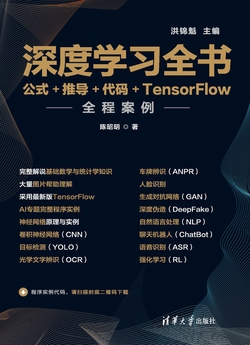
深度学习全书——公式+推导+代码+TensorFlow全程案例
《深度学习全书——公式+推导+代码+TensorFlow全程案例》共有15章,分为5部分,第一篇说明深度学习的概念,包括数理基础,特点是结合编程解题,加深读者印象,第二篇说明TensorFlow的学习地图,从张量、自动微分、梯度下降乃至神经层的实践,逐步解构神经网络,第三篇介绍CNN算法、影像应用、转移学习等,第四篇则进入自然语言处理及语音识别的领域,介绍RNN/BERT/Transformer算法、相关应用等,最后,介绍了强化学习的基础知识,包括马尔可夫决策过程、动态规划、蒙特卡洛、Q Learning算法,当然,还有相关案例实践。
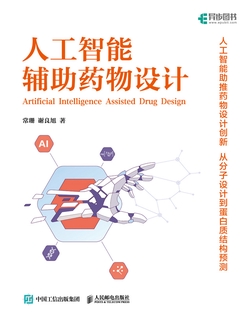
人工智能辅助药物设计
7人今日阅读
本书着重介绍人工智能技术在医药研发领域的应用。全书按照循序渐进的方式组织内容:先介绍人工智能的基本方法和生物医药的基本概念,然后介绍人工智能在分子表示、药物分子性质预测、分子生成、配体与蛋白质结合能力预测,以及蛋白质结构预测等新药研发任务中的具体应用,并结合具体示例,介绍如何将人工智能方法应用到实际的药物研发中。 要想更好地掌握本书涵盖的内容,读者须掌握 Python 语言和药物学的基础知识。本书适合想了解人工智能辅助药物研发的从业人员、高等院校医工交叉学科的学生阅读,也适合对人工智能辅助医药研发感兴趣的药物研发人员、程序员阅读。
7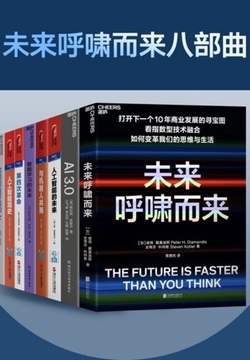
未来呼啸而来八部曲
5人今日阅读 推荐值 89.2%
套装包括《未来呼啸而来》、《AI 3.0》、《人工智能的未来》、《人工智能简史》、《如何创造可信的AI》、《智能学习的未来》、《与机器人共舞》、《第四次革命》共八本。
5
边缘人工智能
2人今日阅读
本书以实用、易于理解的方式介绍了新兴的、迅速发展的边缘人工智能领域。本书涵盖广泛的主题,从核心概念到最新的硬件和软件工具,内容充满了可操作的建议,并包含多个端到端示例。本书可分为两部分:第一部分介绍和讨论关键概念,帮助你了解整个领域的情况,并带你了解有助于设计和实现应用程序的实际过程;第二部分通过三个完整的用例来演示如何运用所学知识解决科学、工业和消费者项目中的实际问题。本书旨在为那些将推动这场革命的工程师、科学家、产品经理和决策者提供指导。它是针对整个领域的高层次指南,提供了一个工作流程和框架,用于利用边缘人工智能解决现实世界的问题。
2
Building Agentic AI Systems
1人今日阅读
Master the art of building AI agents with large language models using the coordinator, worker, and delegator approach for orchestrating complex AI systems Key Features Understand the foundations and advanced techniques of building intelligent, autonomous AI agents Learn advanced techniques for reflection, introspection, tool use, planning, and collaboration in agentic systems Explore crucial aspects of trust, safety, and ethics in AI agent development
1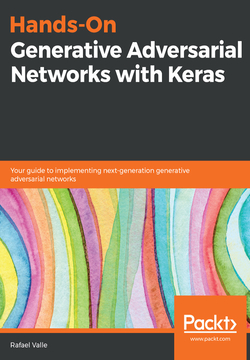
Hands-On Generative Adversarial Networks with Keras
Generative Adversarial Networks (GANs) have revolutionized the fields of machine learning and deep learning. This book will be your first step towards understanding GAN architectures and tackling the challenges involved in training them.This book opens with an introduction to deep learning and generative models, and their applications in artificial intelligence (AI). You will then learn how to build, evaluate, and improve your first GAN with the help of easy-to-follow examples. The next few chapters will guide you through training a GAN model to produce and improve high-resolution images. You will also learn how to implement conditional GANs that give you the ability to control characteristics of GAN outputs. You will build on your knowledge further by exploring a new training methodology for progressive growing of GANs. Moving on, you'll gain insights into state-of-the-art models in image synthesis, speech enhancement, and natural language generation using GANs. In addition to this, you'll be able to identify GAN samples with TequilaGAN.By the end of this book, you will be well-versed with the latest advancements in the GAN framework using various examples and datasets, and you will have the skills you need to implement GAN architectures for several tasks and domains, including computer vision, natural language processing (NLP), and audio processing.Foreword by Ting-Chun Wang, Senior Research Scientist, NVIDIA

AI智能体应用开发
1人今日阅读 推荐值 79.2%
"《AI智能体应用开发》系统梳理AI智能体应用开发的全链条知识体系,详解智能体开发流程涉及的核心理论、关键技术、工程方法、落地流程、实用工具与行业实战案例,为开发者搭建从基础理论到产业实践的完整桥梁,助力解决技术落地中的架构设计、能力构建、场景适配等核心难题,推动AI智能体在工业、科研、政务、金融、服务等领域的规模化落地应用,配套示例源码、PPT课件、配图PDF文件、读者微信交流群。 《AI智能体应用开发》共分16章,内容包括四大板块:介绍智能体基础概念(第1章);详解智能体感知、记忆、知识、情感、推理、工具、协同等关键能力(第2~8章);揭示智能体开发流程、应用参考架构、应用设计模式等工程技术(第9~11章);剖析深度研究、数据分析、数据科学、决策优化、机器视觉等5类垂直场景智能体的完整开发过程(第12~16章)。 《AI智能体应用开发》既适合智能体初学者、智能体开发工程师、AI应用研发人员、行业智能化解决方案提供商,也适合高等院校或高职高专院校人工智能、软件工程、计算机等相关专业的师生,以及关注智能体技术发展与产业应用的行业从业者。"
1
Mastering Machine Learning for Penetration Testing
Cyber security is crucial for both businesses and individuals. As systems are getting smarter, we now see machine learning interrupting computer security. With the adoption of machine learning in upcoming security products, it’s important for pentesters and security researchers to understand how these systems work, and to breach them for testing purposes. This book begins with the basics of machine learning and the algorithms used to build robust systems. Once you’ve gained a fair understanding of how security products leverage machine learning, you'll dive into the core concepts of breaching such systems. Through practical use cases, you’ll see how to find loopholes and surpass a self-learning security system. As you make your way through the chapters, you’ll focus on topics such as network intrusion detection and AV and IDS evasion. We’ll also cover the best practices when identifying ambiguities, and extensive techniques to breach an intelligent system.By the end of this book, you will be well-versed with identifying loopholes in a self-learning security system and will be able to efficiently breach a machine learning system.
深度医疗
7人今日阅读 推荐值 80.3%
全书共包括13个部分,分别讲述了深度医疗的模型、浅度医疗的概况、人工智能对医疗诊断的影响、人工智能的成功先例、深度学习的局限、人工智能对三类“有模式”医生的影响、人工智能对“无模式”医生的影响、人工智能在心理健康领域的应用、人工智能对医疗系统的影响、人工智能如何改变生物医学、人工智能在个性化饮食方案制定上的应用前景、虚拟医疗助手的发展现状,以及深度共情如何让医疗回归人文。
7
The Applied TensorFlow and Keras Workshop
Machine learning gives computers the ability to learn like humans. It is becoming increasingly transformational to businesses in many forms, and a key skill to learn to prepare for the future digital economy.As a beginner, you’ll unlock a world of opportunities by learning the techniques you need to contribute to the domains of machine learning, deep learning, and modern data analysis using the latest cutting-edge tools.The Applied TensorFlow and Keras Workshop begins by showing you how neural networks work. After you’ve understood the basics, you will train a few networks by altering their hyperparameters. To build on your skills, you’ll learn how to select the most appropriate model to solve the problem in hand. While tackling advanced concepts, you’ll discover how to assemble a deep learning system by bringing together all the essential elements necessary for building a basic deep learning system - data, model, and prediction. Finally, you’ll explore ways to evaluate the performance of your model, and improve it using techniques such as model evaluation and hyperparameter optimization.By the end of this book, you'll have learned how to build a Bitcoin app that predicts future prices, and be able to build your own models for other projects.
Deep Learning with Theano
This book is indented to provide a full overview of deep learning. From the beginner in deep learning and artificial intelligence, to the data scientist who wants to become familiar with Theano and its supporting libraries, or have an extended understanding of deep neural nets.Some basic skills in Python programming and computer science will help, as well as skills in elementary algebra and calculus.
TinyML:基于TensorFlow Lite在Arduino和超低功耗微控制器上部署机器学习
1人今日阅读
TinyML是指微型机器学习,更准确地说,TinyML是指工程师们在mW功率以下的设备上,实现机器学习的方法、工具和技术。TinyML将深度学习和嵌入式系统相结合,使得微型设备可以做出令人惊叹的事情。作者解释了如何训练足够小以适合任何环境的模型。对于希望在嵌入式系统中搭建机器学习项目的软件及硬件开发人员而言,本书是一个理想的指南,它将一步步地指导你创建一系列TinyML项目。阅读本书无需任何机器学习或者微控制器开发经验。
1
PyTorch深度学习应用实战
1人今日阅读
本书基于PyTorch,介绍日益普及的演算法与相关套件的使用,例如YOLO(物件侦测)、GAN(生成对抗网路)/DeepFake( 深度伪造)、OCR(辨识图像中的文字)、脸部辨识、BERT/Transformer 、聊天机器人 (ChatBot)、强化学习 (Reinforcement Learning)、自动语音办识 (ASR)、知识图谱 (Knowled ge Graph) 等。PyTorch是近年来最流行的深度学习框架,本书采用新的思路来带初学者来了解和使用PyTorch框架,同时带你入门深度 学习领域。本书通过独特的编排,保证读者在阅读的过程中,可以获得快速的反馈,进而激发学习的动力。
1
洞见未来的“元宇宙”世界(套装8册)
作者彼得·戴曼迪斯和史蒂芬·科特勒全面展示了商业创业风口上的9大指数型技术——量子计算、人工智能、网络、机器人、虚拟现实与增强现实、3D打印、区块链、材料科学与纳米技术、生物技术,并洞察这9大指数型技术的互相融合会带来巨大的变革力量,将会完全重塑我们的生活方式与商业模式。两位作者结合9大指数型技术的融合,充分预测和描述了零售业、广告业、娱乐业、教育、医疗保健、长寿、商业、食品业等8大行业指数型变革的未来。指数型技术融合的背后是掌握指数型思维这一认知逻辑。当下人和组织的增长逻辑都在发生改变,线性增长正在被指数型增长取代。每一个人和组织,只有掌握指数型思维,利用大趋势的确定性来抵抗自己小波动的不确定性,才能应对呼啸而来的未来!数型技术的融合将如何改变今天的传统产业和思维模式?商业、教育、医疗健康等行业将发生怎样的剧变?当人工智能、机器人技术、虚拟现实、材料技术、量子计算与3D打印、区块链和全球千兆网络相互叠加时会发生什么?此刻即未来,科技进步的速度远超任何人的想象,从现在开始的下一个10年,我们将经历比过去一百年更多的动荡并创造更多的财富。

AI工具宝典·主流应用全掌握(套装共12册)
1人今日阅读 推荐值 66.5%
本套装包含:《Kimi高效办公:AI10倍提升工作效率的方法和技巧》《豆包高效办公:AI 10倍提升工作效率的方法与技巧》《DeepSeek超简单入门:从小白到AI达人》《Manus极简入门:从0到1快速打造你的AI智能体》《DeepSeek全民攻略:人人都能掌握的AI工具组合》《DeepSeek AI办公实战手册:10倍提升工作效率的方法与技巧》《一本书学会DeepSeek:写给每个人的工作、生活、副业的AI武功秘笈》《一本书学会Manus:AI智能体实战指南》《夸克AI 高效学习法》《AI绘画极简入门与应用: 豆包、即梦绘画方法与提示词技巧》《豆包高效学习:AI 辅助中小学生学习的方法与技巧》《豆包从入门到精通:AI助手和智能体轻松搞定工作、学习和生活难题》12册图书
1
Learning Spark SQL
If you are a developer, engineer, or an architect and want to learn how to use Apache Spark in a web-scale project, then this is the book for you. It is assumed that you have prior knowledge of SQL querying. A basic programming knowledge with Scala, Java, R, or Python is all you need to get started with this book.

零基础入门Python深度学习
本书从基础知识开始讲解深度学习的原理和应用,包括该领域的发展、深度学习的入门知识、深度学习模型的理论、代码和实际应用中的优化。 本书共12章,主要内容包括深度学习基础、深度学习的环境准备、深度学习的知识准备、神经网络基础知识、使用Keras构建神经网络、神经网络的进一步优化、卷积神经网络、使用Keras构建卷积神经网络、卷积神经网络可视化、迁移学习、循环神经网络和使用Keras构建循环神经网络等。对于本书中介绍的深度学习模型,我们提供了实例代码供读者学习。 本书作为深度学习的入门书籍,适合希望从零开始了解深度学习技术,并且快速掌握深度学习理论和使用深度学习工具的学生和技术人员阅读。

Machine Learning for Imbalanced Data
Take your machine learning expertise to the next level with this essential guide, utilizing libraries like imbalanced-learn, PyTorch, scikit-learn, pandas, and NumPy to maximize model performance and tackle imbalanced data Key Features Understand how to use modern machine learning frameworks with detailed explanations, illustrations, and code samples Learn cutting-edge deep learning techniques to overcome data imbalance Explore different methods for d
OpenCV 4 Computer Vision Application Programming Cookbook(Fourth Edition)
OpenCV is an image and video processing library used for all types of image and video analysis. Throughout the book, you'll work through recipes that implement a variety of tasks, such as facial recognition and detection. With 70 self-contained tutorials, this book examines common pain points and best practices for computer vision (CV) developers. Each recipe addresses a specific problem and offers a proven, best-practice solution with insights into how it works, so that you can copy the code and configuration files and modify them to suit your needs.This book begins by setting up OpenCV, and explains how to manipulate pixels. You'll understand how you can process images with classes and count pixels with histograms. You'll also learn detecting, describing, and matching interest points. As you advance through the chapters, you'll get to grips with estimating projective relations in images, reconstructing 3D scenes, processing video sequences, and tracking visual motion. In the final chapters, you'll cover deep learning concepts such as face and object detection.By the end of the book, you'll be able to confidently implement a range to computer vision algorithms to meet the technical requirements of your complex CV projects

Hands-On Graph Neural Networks Using Python
Design robust graph neural networks with PyTorch Geometric by combining graph theory and neural networks with the latest developments and apps Purchase of the print or Kindle book includes a free PDF eBook Key Features Implement -of-the-art graph neural architectures in Python Create your own graph datasets from tabular data Build powerful traffic forecasting, recommender systems, and anomaly detection applications Book Description G
TensorFlow Machine Learning Projects
TensorFlow has transformed the way machine learning is perceived. TensorFlow Machine Learning Projects teaches you how to exploit the benefits—simplicity, efficiency, and flexibility—of using TensorFlow in various real-world projects. With the help of this book, you’ll not only learn how to build advanced projects using different datasets but also be able to tackle common challenges using a range of libraries from the TensorFlow ecosystem.To start with, you’ll get to grips with using TensorFlow for machine learning projects; you’ll explore a wide range of projects using TensorForest and TensorBoard for detecting exoplanets, TensorFlow.js for sentiment analysis, and TensorFlow Lite for digit classification.As you make your way through the book, you’ll build projects in various real-world domains, incorporating natural language processing (NLP), the Gaussian process, autoencoders, recommender systems, and Bayesian neural networks, along with trending areas such as Generative Adversarial Networks (GANs), capsule networks, and reinforcement learning. You’ll learn how to use the TensorFlow on Spark API and GPU-accelerated computing with TensorFlow to detect objects, followed by how to train and develop a recurrent neural network (RNN) model to generate book scripts.By the end of this book, you’ll have gained the required expertise to build full-fledged machine learning projects at work.
Learning Data Mining with Python
If you are a programmer who wants to get started with data mining, then this book is for you.
Hands-On Predictive Analytics with Python
Predictive analytics is an applied field that employs a variety of quantitative methods using data to make predictions. It involves much more than just throwing data onto a computer to build a model. This book provides practical coverage to help you understand the most important concepts of predictive analytics. Using practical, step-by-step examples, we build predictive analytics solutions while using cutting-edge Python tools and packages.The book's step-by-step approach starts by defining the problem and moves on to identifying relevant data. We will also be performing data preparation, exploring and visualizing relationships, building models, tuning, evaluating, and deploying model.Each stage has relevant practical examples and efficient Python code. You will work with models such as KNN, Random Forests, and neural networks using the most important libraries in Python's data science stack: NumPy, Pandas, Matplotlib, Seaborn, Keras, Dash, and so on. In addition to hands-on code examples, you will find intuitive explanations of the inner workings of the main techniques and algorithms used in predictive analytics.By the end of this book, you will be all set to build high-performance predictive analytics solutions using Python programming.
Natural Language Processing with Python Quick Start Guide
NLP in Python is among the most sought after skills among data scientists. With code and relevant case studies, this book will show how you can use industry-grade tools to implement NLP programs capable of learning from relevant data. We will explore many modern methods ranging from spaCy to word vectors that have reinvented NLP.The book takes you from the basics of NLP to building text processing applications. We start with an introduction to the basic vocabulary along with a workflow for building NLP applications.We use industry-grade NLP tools for cleaning and pre-processing text, automatic question and answer generation using linguistics, text embedding, text classifier, and building a chatbot. With each project, you will learn a new concept of NLP. You will learn about entity recognition, part of speech tagging and dependency parsing for Q and A. We use text embedding for both clustering documents and making chatbots, and then build classifiers using scikit-learn.We conclude by deploying these models as REST APIs with Flask.By the end, you will be confident building NLP applications, and know exactly what to look for when approaching new challenges.

深度学习原理及实践——详解图像处理和信号识别领域的14个案例
"本书一部从深度学习原理、算法和工程实践三个维度阐述信号处理的著作。涉及人工神经网络、卷积神经网络、生成对抗网络、长短时间记忆网络、深度自编码器及循环神经网络等模型在图像处理、信号识别及波达估计等领域的应用。利用大量实例代码对网络模型进行分析,这些案例架起了深度学习原理与应用间的桥梁,有利于加深读者对网络模型的认识,有利于读者全面深入系统地了解深度学习的算法原理、核心思想和应用技巧,达到学以致用的目的。 本书适用于从事大数据及机器学习领域工作,对人工智能和深度学习感兴趣的各类读者。"

航天动力学与控制系列丛书--空间多目标交会轨道设计与优化方法
1人今日阅读
空间多目标交会可提高在轨服务与深空探测等航天任务的回报,降低任务平均成本,逐渐受到各航天机构青睐。其轨道设计与优化存在复杂的离散与连续变量耦合,极具挑战,相关问题经常出现在国际和全国空间轨道设计竞赛题目中,也是近年航天器轨道设计领域研究热点。本书作者在空间交会领域有丰富的科研及工程经验,也曾多次参加空间轨道设计竞赛并取得了优异成绩。本书总结了作者及所在团队的部分研究成果,内容共分为6章。第1章阐述问题背景和研究现状;第2章介绍基础模型和算法;第3章关注单目标交会,包括摄动交会轨迹优化与速度增量估计;第4章关注多星补给任务,包括多航天器交会服务任务、星座补给重构任务、考虑目标配合的多航天器合作加注任务等的轨道设计与优化;第5章关注多空间碎片清除任务,包括“一对多”式碎片清除任务与“多对多”式大规模碎片清除任务的轨道设计与优化;第6章是含引力辅助的多星探测任务轨道设计与优化。 本书可为航天动力学、航天器轨迹优化、航天任务总体设计等领域的研究人员提供有益参考,也可为相关领域研究生入门提供助益。
1
Hands-On Mathematics for Deep Learning
Most programmers and data scientists struggle with mathematics, having either overlooked or forgotten core mathematical concepts. This book uses Python libraries to help you understand the math required to build deep learning (DL) models.You'll begin by learning about core mathematical and modern computational techniques used to design and implement DL algorithms. This book will cover essential topics, such as linear algebra, eigenvalues and eigenvectors, the singular value decomposition concept, and gradient algorithms, to help you understand how to train deep neural networks. Later chapters focus on important neural networks, such as the linear neural network and multilayer perceptrons, with a primary focus on helping you learn how each model works. As you advance, you will delve into the math used for regularization, multi-layered DL, forward propagation, optimization, and backpropagation techniques to understand what it takes to build full-fledged DL models. Finally, you’ll explore CNN, recurrent neural network (RNN), and GAN models and their application.By the end of this book, you'll have built a strong foundation in neural networks and DL mathematical concepts, which will help you to confidently research and build custom models in DL.
Hands-On Penetration Testing with Python
With the current technological and infrastructural shift, penetration testing is no longer a process-oriented activity. Modern-day penetration testing demands lots of automation and innovation; the only language that dominates all its peers is Python. Given the huge number of tools written in Python, and its popularity in the penetration testing space, this language has always been the first choice for penetration testers.Hands-On Penetration Testing with Python walks you through advanced Python programming constructs. Once you are familiar with the core concepts, you’ll explore the advanced uses of Python in the domain of penetration testing and optimization. You’ll then move on to understanding how Python, data science, and the cybersecurity ecosystem communicate with one another. In the concluding chapters, you’ll study exploit development, reverse engineering, and cybersecurity use cases that can be automated with Python.By the end of this book, you’ll have acquired adequate skills to leverage Python as a helpful tool to pentest and secure infrastructure, while also creating your own custom exploits.
如何创造可信的AI
关于人工智能的炒作总是甚嚣尘上,但要得到真正可信的AI,却远比想象的要复杂得多,超级智能的时代还远没有到来。创造真正可信的AI需要赋予机器常识和深度理解,而不是简单地统计分析数据。本书勾勒了未来人工智能发展的最佳路线图,对当前人工智能的现状进行了清晰且客观的评估。作者盖瑞·马库斯是人工智能领域的专家,同时还是心理学和神经科学教授,在计算机科学、认知科学、语言学、人工智能等领域都练就了相当深厚的学术功底,并敢于挑战学术界的主流观点。当整个人工智能学术界都在过分乐观地高歌猛进时,他不断撰文和发表演讲来指出以深度学习为代表的当下AI的弊端和局限性,《如何创造可信的AI》这本书正是马库斯对他关于人工智能观点的最佳总结。盖瑞·马库斯和欧内斯特·戴维斯从深度学习算法固有的缺陷出发,阐述了当下 AI 技术发展的桎梏,对当前 AI 的场景应用和研究范式中的问题进行了分析,他指出AI真正的问题在于信任,常识才是深度理解的关键。最终从认知科学中提炼出了11条对人工智能发展方面的启示,以通用人工智能为发展目标,给出了未来 AI 技术的一种发展方向。
Advanced Deep Learning with Keras
Recent developments in deep learning, including GANs, Variational Autoencoders, and Deep Reinforcement Learning, are creating impressive AI results in our news headlines - such as AlphaGo Zero beating world chess champions, and generative AI that can create art paintings that sell for over $400k because they are so human-like.Advanced Deep Learning with Keras is a comprehensive guide to the advanced deep learning techniques available today, so you can create your own cutting-edge AI. Using Keras as an open-source deep learning library, you'll find hands-on projects throughout that show you how to create more effective AI with the latest techniques.The journey begins with an overview of MLPs, CNNs, and RNNs, which are the building blocks for the more advanced techniques in the book. You’ll learn how to implement deep learning models with Keras and Tensorflow, and move forwards to advanced techniques, as you explore deep neural network architectures, including ResNet and DenseNet, and how to create Autoencoders. You then learn all about Generative Adversarial Networks (GANs), and how they can open new levels of AI performance. Variational AutoEncoders (VAEs) are implemented, and you’ll see how GANs and VAEs have the generative power to synthesize data that can be extremely convincing to humans - a major stride forward for modern AI. To complete this set of advanced techniques, you'll learn how to implement Deep Reinforcement Learning (DRL) such as Deep Q-Learning and Policy Gradient Methods, which are critical to many modern results in AI.
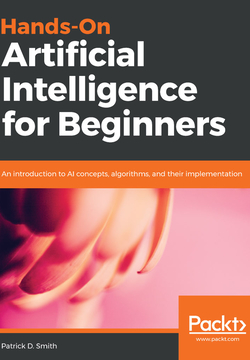
Hands-On Artificial Intelligence for Beginners
1人今日阅读
Virtual Assistants, such as Alexa and Siri, process our requests, Google's cars have started to read addresses, and Amazon's prices and Netflix's recommended videos are decided by AI. Artificial Intelligence is one of the most exciting technologies and is becoming increasingly significant in the modern world.Hands-On Artificial Intelligence for Beginners will teach you what Artificial Intelligence is and how to design and build intelligent applications. This book will teach you to harness packages such as TensorFlow in order to create powerful AI systems. You will begin with reviewing the recent changes in AI and learning how artificial neural networks (ANNs) have enabled more intelligent AI. You'll explore feedforward, recurrent, convolutional, and generative neural networks (FFNNs, RNNs, CNNs, and GNNs), as well as reinforcement learning methods. In the concluding chapters, you'll learn how to implement these methods for a variety of tasks, such as generating text for chatbots, and playing board and video games.By the end of this book, you will be able to understand exactly what you need to consider when optimizing ANNs and how to deploy and maintain AI applications.
1